admin
Updated June 3, 2026
12 min read

Key Takeaways
|
Parents of children with disabilities can access several important government programs that help reduce financial pressure and improve access to healthcare, education, and daily care support. While the child is the one who qualifies medically for disability benefits, the support directly helps parents manage medical bills, therapy costs, and living expenses.
In most cases, families may qualify for Supplemental Security Income (SSI), Medicaid, SNAP food assistance, and state-based caregiver programs depending on income and medical eligibility. According to the CDC, about 1 in 6 children (around 17%) aged 3–17 in the United States have a developmental disability, which highlights how common and important these support systems are for families.
This guide explains exactly how parents can claim disability benefits for their disabled child, what programs are available, and how to improve approval chances step by step.
What Disability Benefits Mean For Families Of Disabled Children
Disability benefits for children are designed to support the child’s medical and financial needs, but they also function as family disability benefits because they help reduce the overall burden on parents or caregivers.
These benefits typically cover:
- Monthly financial assistance (SSI)
- Free or low-cost healthcare (Medicaid)
- Therapy and medical treatment
- Educational support services
The Social Security Administration (SSA) provides disability-related support to millions of individuals, including children receiving SSI each month, making it one of the most important safety nets for families dealing with long-term medical conditions.
Who Qualifies For Disability Benefits For A Child?
To qualify for disability benefits, a child must meet the SSA’s medical definition of disability:
- A physical or mental condition that seriously limits daily functioning
- The condition must last at least 12 months or be expected to result in death
- The condition must significantly affect learning, movement, communication, or behavior
In addition to medical eligibility, household income and resources play a major role in SSI approval.
SSA data shows that over 8 million people receive SSI benefits, including disabled children, elderly individuals, and adults with limited income and severe disabilities.
Key Government Benefits For Families Of Disabled Children
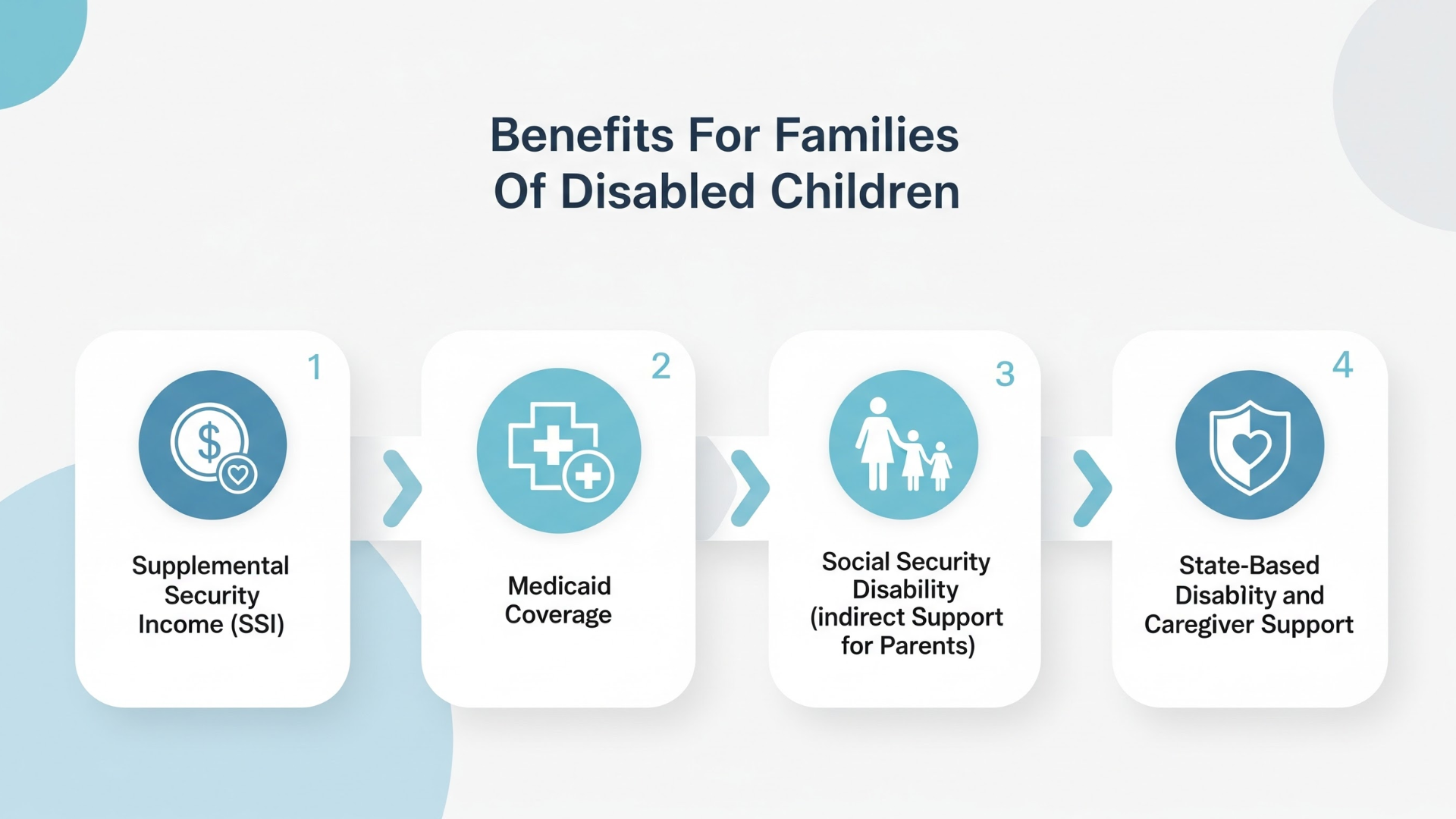
1. Supplemental Security Income (SSI)
SSI is the primary federal program for disabled children from low-income families. It provides monthly cash assistance to help cover basic needs. SSI is often the first and most important financial support for families because it helps cover ongoing care costs that many insurance plans do not fully pay for.
- Benefit amount depends on household income
- Parents’ income is considered in eligibility (known as “deeming”)
- In most cases, only household income and resources within strict limits are evaluated, making SSI highly need-based
- Payments vary by state due to additional supplements
For many families, SSI benefits help pay for therapy sessions, special education needs, transportation to medical appointments, and daily caregiving support.
2. Medicaid Coverage
Most children who qualify for SSI are also eligible for Medicaid, which provides critical healthcare coverage. For families of disabled children, Medicaid often becomes the backbone of long-term medical support.
Medicaid can cover:
- Doctor visits and hospital care
- Prescription medications
- Physical, speech, and occupational therapy
- Medical equipment and long-term treatment
According to the Kaiser Family Foundation (KFF), approximately 75.3 million people are enrolled in Medicaid and CHIP programs in the United States. This highlights the program’s critical role in supporting millions of low-income individuals and families, including children with disabilities.
3. Social Security Disability (Indirect Support for Parents)
While Social Security Disability Insurance (SSDI) is primarily designed for disabled workers, it can still indirectly support families with disabled children in certain situations.
This may happen when:
- A parent reduces work hours or leaves employment due to caregiving responsibilities
- Household income is affected because one caregiver is unable to work full-time
- A disabled parent in the household qualifies for SSDI, increasing overall family income stability
In some cases, if a parent receives SSDI, their dependent children may also qualify for auxiliary (dependent) benefits, which can provide additional monthly financial support.
However, it is important to note that for families of disabled children, the primary federal support programs remain SSI for the child and Medicaid for healthcare coverage.
4. State-Based Disability and Caregiver Support
Many states offer additional assistance programs such as:
- Home care services (waivers)
- Respite care for caregivers
- In-home nursing support
- Transportation assistance
These programs are often part of broader disability support for families, helping parents manage daily caregiving demands. These supports are especially important because many families face long-term caregiving responsibilities that can limit work hours, income, and personal time.
According to Medicaid data, Home and Community-Based Services (HCBS) waivers support millions of individuals with disabilities each year, helping them receive care at home instead of institutional settings.
Important Note: Eligibility for these programs varies by state and is often based on the child’s level of disability, household income, and medical needs.
Step-By-Step Guide To Applying For Disability Benefits For A Child
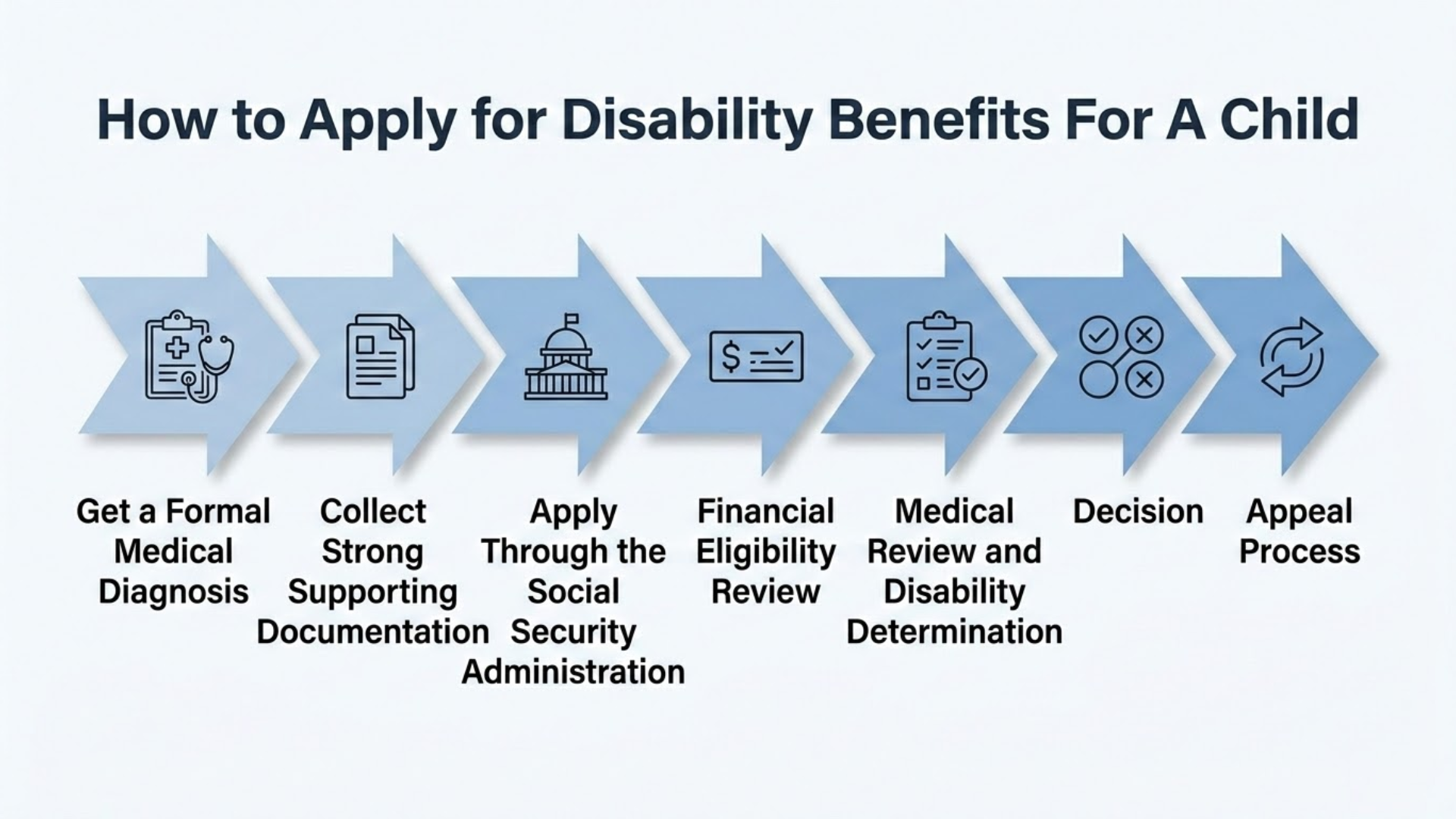
Applying for disability benefits for a child through the Social Security Administration (SSA) can feel complex, but breaking it into clear steps makes the process much easier. Below is a complete walkthrough from diagnosis to approval or appeal.
Step 1: Get a Formal Medical Diagnosis
The first and most important step is obtaining a confirmed medical diagnosis from a licensed healthcare professional (such as a pediatrician, specialist, or hospital).
This diagnosis should clearly include:
- The exact medical or developmental condition
- Severity of symptoms
- How the condition affects daily functioning
- Expected duration (must be long-term, typically 12+ months)
Useful Tip: SSA does not approve claims based only on a diagnosis name. They focus heavily on how the condition limits the child’s daily life (walking, learning, communication, behavior, etc.).
Step 2: Collect Strong Supporting Documentation
Once the diagnosis is confirmed, parents should gather complete medical and functional evidence. This is one of the most important parts of the entire application.
You should collect:
Medical records
- Doctor reports and prescriptions
- Hospital and clinic visit summaries
- Lab results and imaging reports
Therapy and treatment records
- Speech therapy notes
- Occupational/physical therapy reports
- Psychiatric or behavioral therapy records
School-related documents
- Individualized Education Program (IEP)
- Teacher evaluations and performance reports
- Attendance and learning difficulty records
Quick Tip: The more consistent and long-term the documentation, the stronger the case becomes.
Step 3: Apply Through the Social Security Administration (SSA)
Parents can apply for disability benefits through the SSA in three ways:
- Online through the official SSA website
- By phone with an SSA representative
- In person at a local Social Security office
During the application, you will need:
- Child’s personal details (SSN, birth certificate)
- Medical provider information
- School and therapy details
- Household income and financial information
Quick Tip: Make sure all information is accurate and complete. Missing details can delay the case or lead to denial.
Step 4: Financial Eligibility Review (SSI Means-Test)
If applying for SSI (Supplemental Security Income), SSA will check household income and resources.
They evaluate:
- Parents’ monthly income
- Number of people in the household
- Assets and savings
- Any additional support or benefits received
Important Note: Even if a child has a severe disability, SSI approval still depends on financial eligibility. Higher household income may reduce or eliminate payment eligibility.
Step 5: Medical Review and Disability Determination
After submission, the case is sent for a detailed medical evaluation by SSA’s Disability Determination Services (DDS).
This step includes:
- Review of all medical and school records
- Requests for additional information, if needed
- Possible medical exams (consultative exams arranged by SSA)
They assess:
- Severity of condition
- Functional limitations in daily life
- Long-term impact on development and learning
Useful Tip: This stage is where many claims are decided, so complete documentation is critical.
Step 6: Decision (Approval or Denial)
After review, SSA will issue a written decision:
If approved:
- Monthly SSI payments begin
- Medicaid eligibility is usually granted automatically
- Benefits may include back pay (depending on case timing)
If denied:
- Parents receive a denial notice explaining the reasons
- You still have the legal right to appeal
Step 7: Appeal Process (If Denied)
If your application is denied, do not assume the process is over. Many families succeed at the appeal stage.
The appeal process includes:
- Reconsideration (new review of your case)
- Hearing before an Administrative Law Judge (ALJ)
- Appeals Council review (if needed)
- Federal Court review (final stage)
Important Insight: SSA data shows that around 60-65% of initial disability claims are denied, which makes appeals and strong documentation extremely important for approval.
What Other Financial Assistance Can Parents Of Disabled Children Receive?
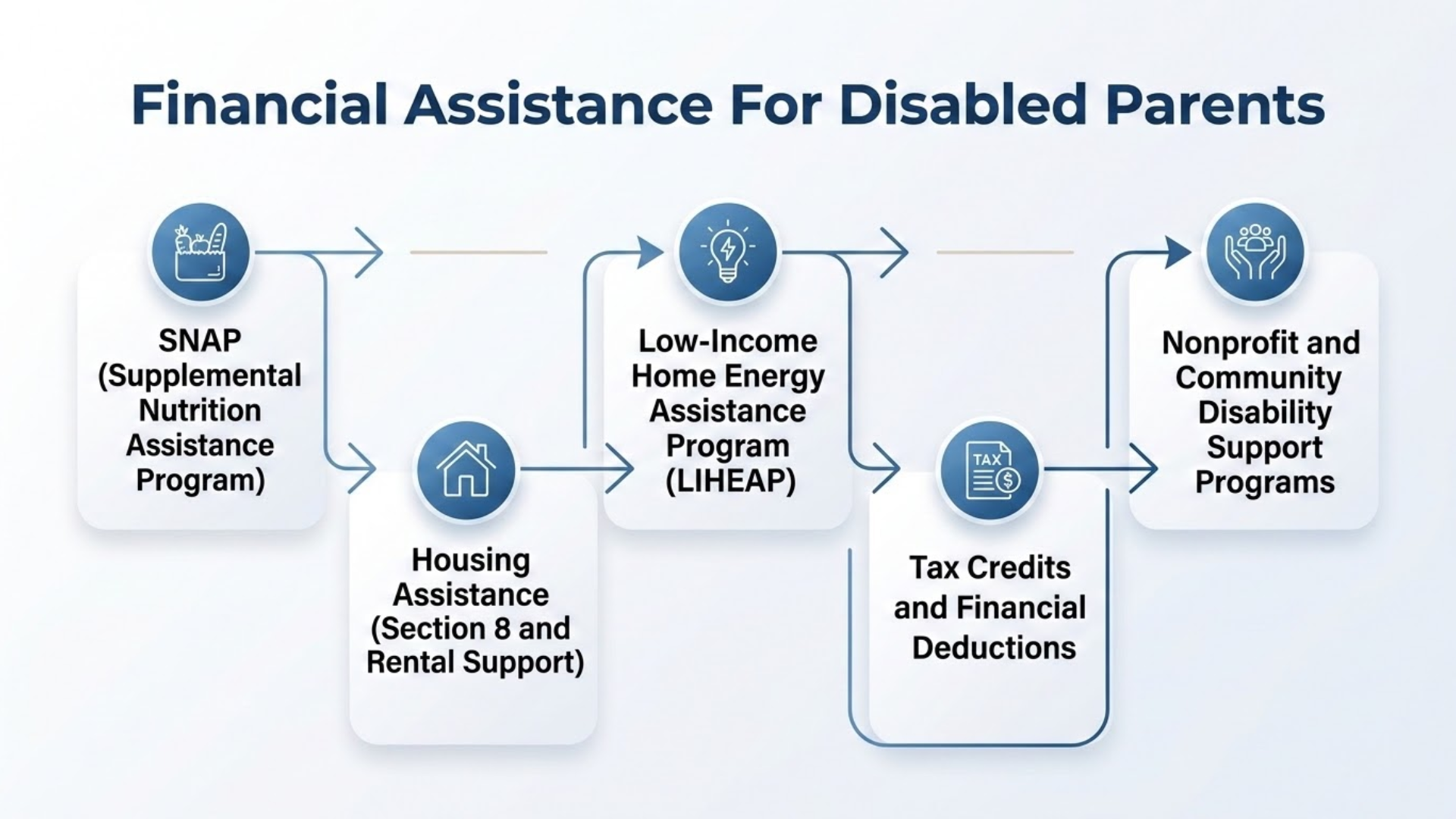
In addition to SSI benefits, families caring for a disabled child may qualify for several other government and nonprofit assistance programs. These programs can help reduce the financial strain caused by medical expenses, caregiving responsibilities, housing costs, and everyday living needs.
SNAP (Supplemental Nutrition Assistance Program)
SNAP, commonly known as food stamps, helps low-income families pay for groceries and essential food items. Families with a disabled child may qualify based on household income and expenses.
Benefits are provided monthly through an Electronic Benefit Transfer (EBT) card, which can be used at approved grocery stores and retailers.
According to USDA data, SNAP supports more than 40 million people every month across the United States, making it one of the country’s largest food assistance programs.
Housing Assistance (Section 8 and Rental Support)
Families caring for a disabled child may also qualify for housing assistance programs such as Section 8 Housing Choice Vouchers.
These programs help eligible families:
- Reduce monthly rent costs
- Access safer and more stable housing
- Avoid housing insecurity during financial hardship
Eligibility is usually based on income level, family size, and local housing authority requirements.
Low-Income Home Energy Assistance Program (LIHEAP)
LIHEAP helps low-income households pay heating and cooling bills. This support can be especially important for families with disabled children who rely on medical equipment, temperature-sensitive care, or increased home energy use.
According to the LIHEAP Action Center, the program provides heating and cooling assistance to approximately 6.7 million households, making it one of the most important social safety net programs in the United States.
Tax Credits and Financial Deductions
Some parents may qualify for tax benefits related to caring for a disabled child. Depending on the family’s situation, these may include:
- Child Tax Credits
- Dependent care deductions
- Medical expense deductions
- Earned Income Tax Credit (EITC)
Eligibility and benefit amounts vary based on income, filing status, and the child’s medical condition.
Nonprofit and Community Disability Support Programs
Many nonprofit organizations offer additional support for families caring for disabled children. These organizations may provide:
- Financial grants
- Therapy assistance
- Medical equipment support
- Transportation services
- Parent counseling and caregiver resources
Local charities, disability advocacy groups, and community organizations can often help families find resources that are not widely advertised through government agencies.
What Medical and Care Support Services Are Available for Families?
Families raising a child with a disability may qualify for several healthcare, education, and caregiving support programs that can reduce financial stress and improve daily care. These services are designed to help children receive proper treatment, therapy, and educational assistance while also supporting parents and caregivers.
According to the U.S. Department of Education, more than 7 million children receive special education services each year under the Individuals with Disabilities Education Act (IDEA).
Here are some of the most important support services available for families:
Medicaid Home and Community-Based Services (HCBS) Waivers
HCBS waiver programs help children receive care at home instead of in hospitals or institutions. Depending on the state, these programs may cover:
- In-home nursing care
- Personal caregivers
- Medical equipment
- Therapy services
- Transportation assistance
These waivers can significantly reduce caregiving costs for families caring for children with severe disabilities or long-term medical needs.
Special Education Services Under IDEA Law
The Individuals with Disabilities Education Act (IDEA) ensures that children with disabilities receive free and appropriate public education support. Schools are required to provide services that help children learn in the least restrictive environment possible.
This may include:
- Classroom accommodations
- Specialized instruction
- Behavioral support
- Therapy services provided through school programs
Individualized Education Programs (IEPs)
An IEP is a customized learning plan created for students with disabilities. It outlines:
- The child’s educational goals
- Special accommodations needed in school
- Therapy or support services required
- Progress tracking methods
Parents are directly involved in developing the IEP and can request updates or changes when needed.
Speech, Occupational, and Physical Therapy Coverage
Many children with disabilities need ongoing therapy to improve communication, movement, and daily living skills.
Programs like Medicaid or school-based services may cover:
- Speech therapy for communication difficulties
- Occupational therapy for daily tasks and motor skills
- Physical therapy to improve mobility and strength
These therapies can play a major role in improving a child’s independence and quality of life.
Respite Care Programs for Parents and Caregivers
Caring for a child with a disability can be physically and emotionally demanding. Respite care programs provide temporary caregiving support, allowing parents time to rest, attend appointments, work, or manage other daily responsibilities.
Depending on the program, respite care may be available:
- In the family’s home
- Through local community organizations
- During weekends or short-term stays
Helpful Resource for Parents: Families looking for caregiver support resources can also visit the National Respite Network & Resource Center for information about respite programs, state services, and caregiver assistance options.
What to Do Next
Applying for disability benefits for a child can be difficult because of strict eligibility rules, delays, and high denial rates. Parents can improve approval chances by submitting strong medical records, school reports, therapy documents, and clear proof of daily limitations.
Programs like SSI, Medicaid, SNAP, and state assistance can help reduce financial and caregiving stress for families.
If you need help with an application or appeal, Nationwide Disability Representatives can help you understand your options and pursue the benefits your child may qualify for.