admin
Updated July 16, 2026
8 min read

Yes, you may be eligible for disability benefits if you have never worked. You usually cannot get SSDI on your own record without work credits, but you may qualify for SSI if:
- You are disabled, blind, or age 65 or older, and
- Have limited income and resources
If your disability began before age 22, Disabled Adult Child benefits may also apply. SSA confirms that SSI is for people with limited income and resources who meet age, blindness, or disability rules.
Can you get Social Security if you never worked?
The better question is: which Social Security program fits your situation?
Which Benefit Should You Check First?
Check the following table before you assume you are not eligible.
| Your Situation | Benefit to Check First | Why it Matters |
| You never worked and have low income/resources | SSI | SSI does not require work credits. |
| You worked part-time or years ago | SSI and SSDI | You may have some credits. |
| Your disability began before age 22 | Disabled Adult Child benefits and SSI | A parent’s record may help. |
| You are a stay-at-home parent | SSI first | Unpaid caregiving usually does not create SSDI credits. |
| You are married | SSI, with spouse income review | Spouse income may affect SSI. |
| You are applying for a disabled child | Children’s SSI | Parent income may count. |
Why SSDI Usually Requires Work History
SSDI is an insurance benefit. You earn coverage by working in jobs covered by Social Security and paying Social Security taxes.
In 2026, SSA says you earn one Social Security credit for each $1,890 in covered earnings, up to four credits per year. SSA also says it cannot pay benefits if a person does not have enough credits.
So, if you never worked, never had covered earnings, and never paid Social Security taxes, you usually cannot get SSDI on your own record.
If you worked even a little, do not guess. Ask a Social Security disability attorney to review your earnings record.
Can I Get SSI If I Never Worked?
The answer to the question can I get SSI if I never worked is yes, if you meet SSI’s medical and financial rules.
SSI is needs-based. It can help people who are disabled, blind, or age 65 or older and have limited income and resources. SSA’s SSI page explains that SSI can pay monthly benefits to people with little or no income or resources.
For 2026, the federal SSI maximum is $994 per month for an eligible individual and $1,491 for an eligible couple. SSA lists these as the 2026 federal SSI amounts.
SSI also has resource limits. SSA explains that countable resources affect eligibility, but not everything you own counts.
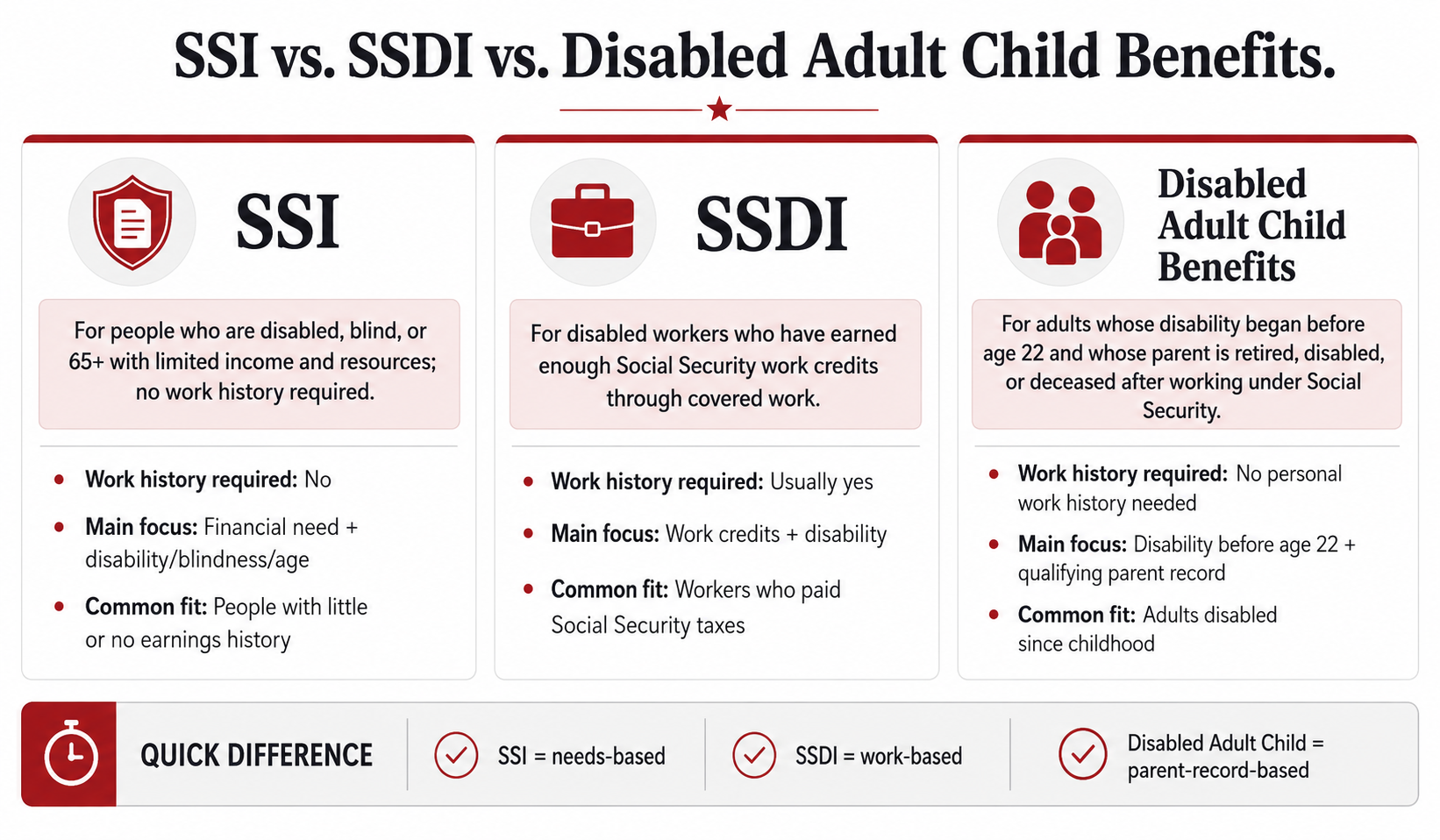
SSI vs. SSDI vs. Disabled Adult Child Benefits
| Benefit | Requires your own work history? | Main eligibility issue | Common fit |
| SSA | No | Disability plus limited income/resources | Adults or children with little income |
| SSDI | Usually yes | Enough work credits and disability | Workers who paid Social Security taxes |
| Disabled Adult Child benefits | No personal work history required | Disability began before age 22 and parent record qualifies | Adults disabled since childhood |
Does Household Income Affect SSI?
Yes. Household income can affect SSI.
If you are married, SSA may count part of your spouse’s income and resources. If a child applies, SSA may count part of the parents’ income and resources. If you live in someone else’s home and receive free food or shelter, your SSI amount may also change.
This is one reason SSI claims feel confusing. Two people can have the same diagnosis, but different SSI results because their households are different.
Disabled Adult Child Benefits: The Rule Many People Miss
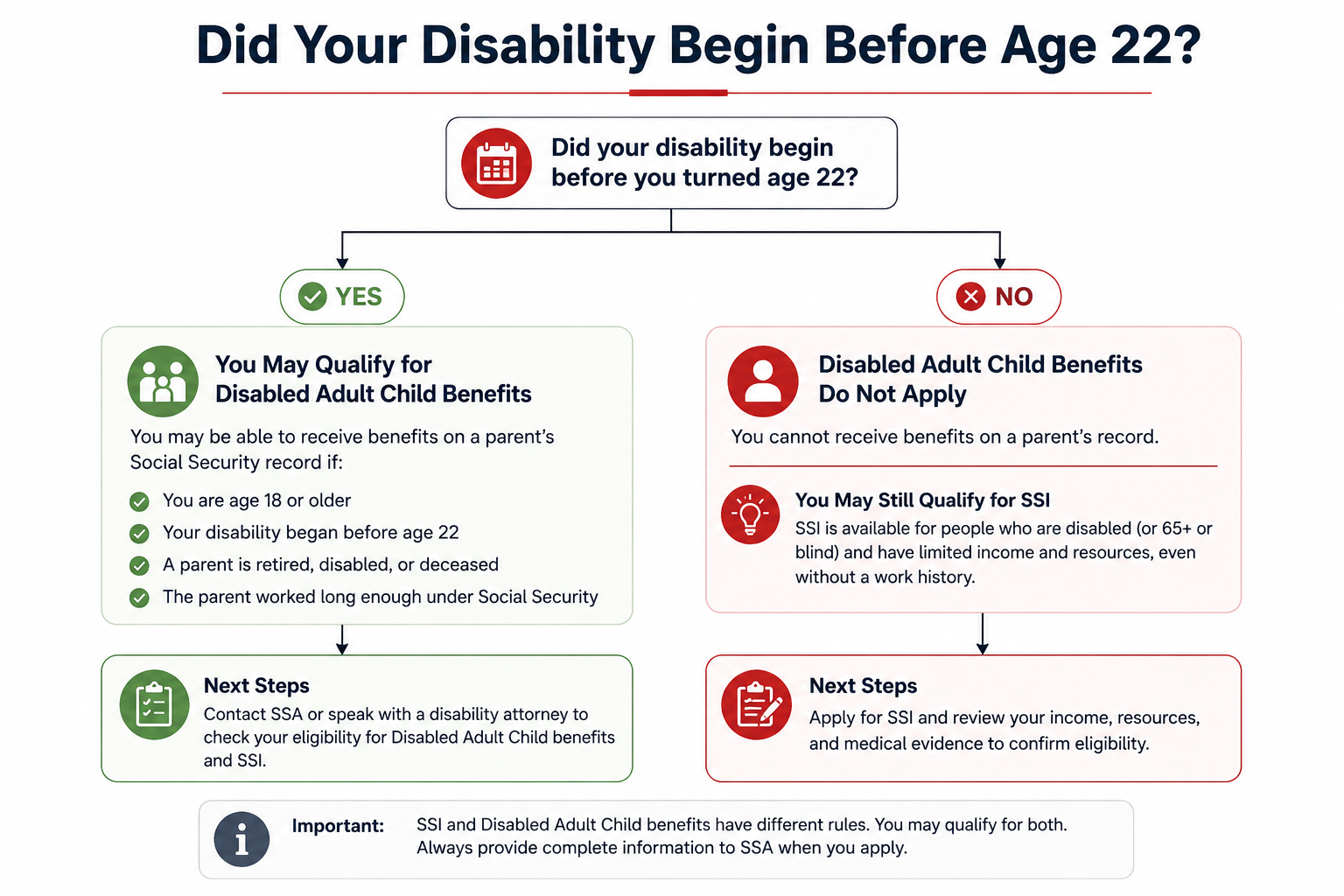
Disabled Adult Child benefits are often missed by people who never worked. SSA also calls these Childhood Disability Benefits.
You may qualify if you are 18 or older, your disability began before age 22, and a parent is retired, disabled, or deceased after working long enough under Social Security. The benefit comes from the parent’s record, not your own. SSA’s handbook explains the age-22 disability rule for disabled child benefits.
Example: Anthony became disabled at 16 and never worked. He may qualify for SSI now. If his parents later receive Social Security retirement or disability benefits, Anthony may also qualify for Disabled Adult Child benefits.
Marriage can affect these benefits. Do not assume you qualify or do not qualify without checking the rule carefully.
Can Stay-at-Home Parents Get Disability Benefits?
Yes, but the program matters.
A stay-at-home parent may have done years of real work caring for children and managing a home. But unpaid caregiving usually does not create Social Security work credits. SSDI credits come from covered earnings.
That means a stay-at-home parent with no paid work history may not qualify for SSDI on their own record. SSI may still be available if income and resources are low enough.
Spouse-related benefits may also matter, especially for retirement or survivor issues. But for disability, SSI is usually the first program to check.
What If You Worked a Little?
If you worked part-time, had short jobs, worked years ago, or were self-employed, ask a Social Security disability attorney to check your record.
You may have more credits than you think. Younger workers may need fewer credits than older workers. You may also qualify for SSI if you do not qualify for SSDI or if your SSDI amount is very low.
A practical rule: if you are unsure, ask about both SSI and SSDI.
How to Apply If You Have Never Been Employed
Start with SSA. You can apply online, by phone, or through a local Social Security office. SSI claims often require an interview because SSA must review income, resources, and living arrangements.
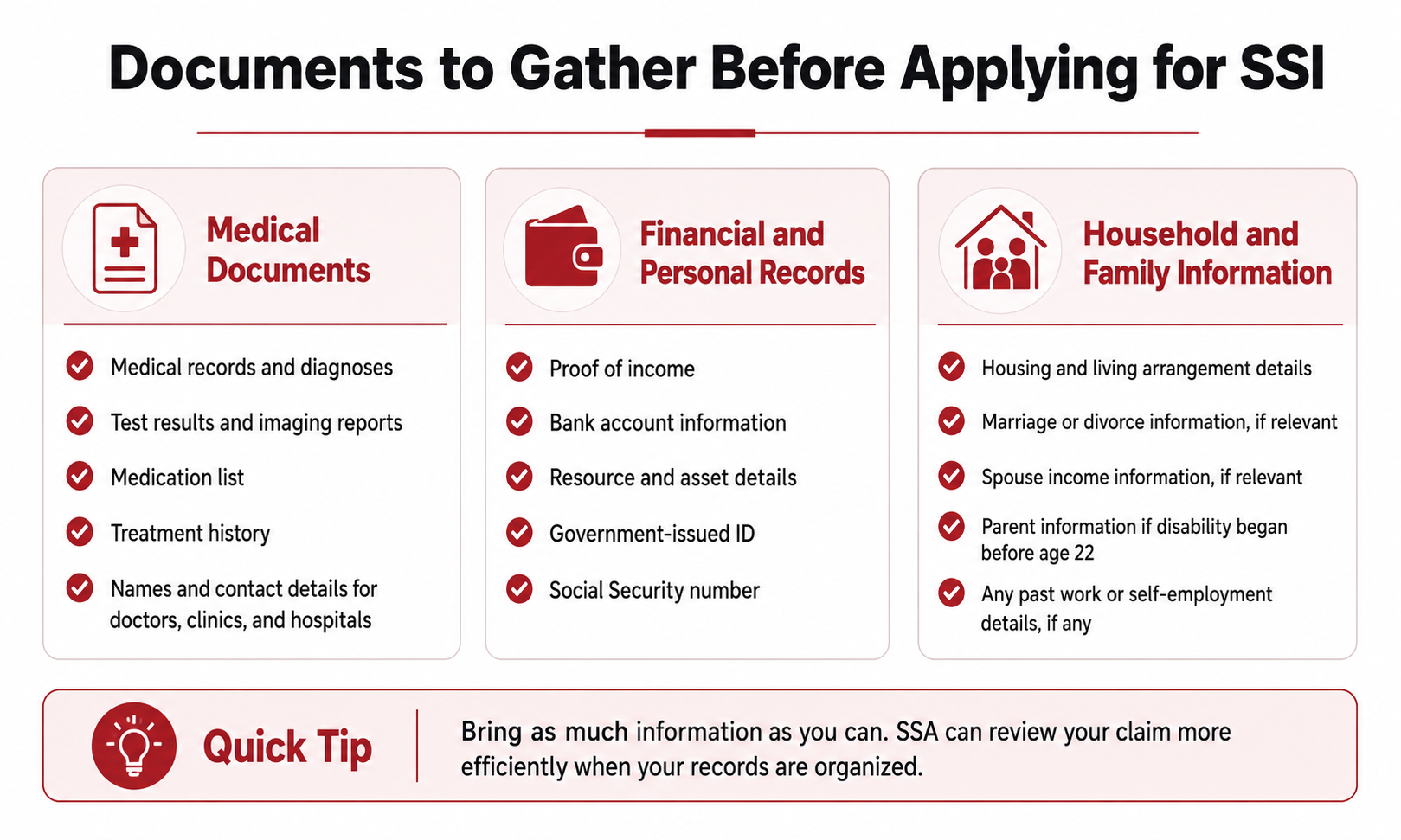
Gather these documents before or soon after applying:
- Medical records, diagnoses, and test results
- Doctor, hospital, and clinic contact information
- Medication lists and side effects
- Bank account and resource information
- Housing and living arrangement details
- Parent information if disability began before age 22
- Marriage, divorce, or spouse information if relevant
SSA does not approve a claim just because you have a diagnosis. Your records should explain how your condition limits walking, standing, sitting, lifting, using your hands, focusing, remembering, handling stress, or keeping a schedule.
Why Claims From Non-Workers Are Denied
Claims from people who never worked are often denied for three reasons.
- The applicant may not meet SSI’s financial rules.
- The medical evidence may not prove a severe condition that has lasted or is expected to last at least 12 months.
- The wrong program may have been considered.
Here is the practical breakdown:
| Denial Reason | What it Means | What may help |
| Too much income/resources | SSI financial rules were not met | Review countable vs. excluded resources |
| Not enough medical proof | SSA could not confirm severity | Add records, tests, treatment notes |
| Wrong benefit program reviewed | SSA looked mainly at SSDI, but SSI or Disabled Adult Child benefits may also apply | Ask SSA to review SSI, SSDI, and Disabled Adult Child benefits |
| Not enough proof of functional limits | Records show the diagnosis, but not how the condition affects walking, standing, sitting, lifting, focusing, remembering, or keeping a schedule | Explain real work-related limits through medical records, forms, doctor statements, and daily examples |
A denial is not always the end. Many cases improve on appeal when the file has better medical evidence and clearer statements about daily limits.
Attorney Experience Note
In disability intake calls, one common mistake is assuming “never worked” means “no benefits.” That is not always true. The stronger question is whether the person has a qualifying disability, limited income/resources, a parent’s Social Security record, or any past covered earnings.
Another common mistake is applying only for SSDI when SSI is the more realistic path.
Before You Apply: Quick Checklist
Before filing, ask yourself:
- Did I ever have paid work or self-employment?
- Did my disability begin before age 22?
- Is a parent retired, disabled, or deceased?
- Am I married, and does my spouse have income?
- Do I have more than the SSI resource limit?
- Do my medical records show how my condition limits daily function?
- Should I ask SSA to screen me for both SSI and SSDI?
Conclusion
If you never worked, you are not automatically barred from disability benefits. SSDI may not be available on your own record, but SSI may still apply. If your disability began before age 22, Disabled Adult Child benefits may also matter. Your best next step is to review your medical proof, income, resources, household, and family record.
| Nationwide Disability Representatives have 35+ years of experience in a variety of personal injury and social security disability cases. Schedule a free consultation today! |