seo
Updated December 15, 2021
8 min read

| SUMMARY
|
Bronchiectasis is a critical lung condition that can lead to permanent damage to the lungs’ bronchial tubes. It often occurs as a result of damage to the muscle and tissue in the lungs’ passageways, which are often called bronchi.
The damaged air passageways can lead to recurring infections or airway blockages, making daily breathing and activity increasingly difficult over time. As of now, there is no cure for this disorder. However, the condition can be managed, and the symptoms can be controlled with the right treatment plan.
If bronchiectasis is limiting your ability to work, contacting a disability attorney is one of the most important steps you can take. A qualified attorney can review your medical records, explain your rights under Social Security law, and guide you through the process of securing the disability benefits for bronchiectasis you may be entitled to.
What Are the Common Causes of Bronchiectasis?
According to the Disability Guidance Organization, between 350,000 and 500,000 people in the United States are living with bronchiectasis. Many of them are unaware that the condition may entitle them to Social Security disability benefits.
Lung infections and injuries can lead to this disorder. It can be categorized into two types:
- CF bronchiectasis, also referred to as cystic fibrosis (CF) bronchiectasis, is a genetic condition that can lead to the irregular production of mucus.
- Non-CF bronchiectasis is a non-hereditary condition that develops as a result of lung damage caused by infections or other underlying illnesses.
Common conditions that can lead to non-CF bronchiectasis include:
- Immunodeficiency disorders
- Inflammatory bowel disease (IBD)
- Alpha-1 antitrypsin deficiency
- Autoimmune diseases, such as rheumatoid arthritis
- COPD (chronic obstructive pulmonary disease)
- HIV (human immunodeficiency virus)
- Allergic bronchopulmonary aspergillosis
- Other lung infections, such as whooping cough and tuberculosis
Common Bronchiectasis Symptoms
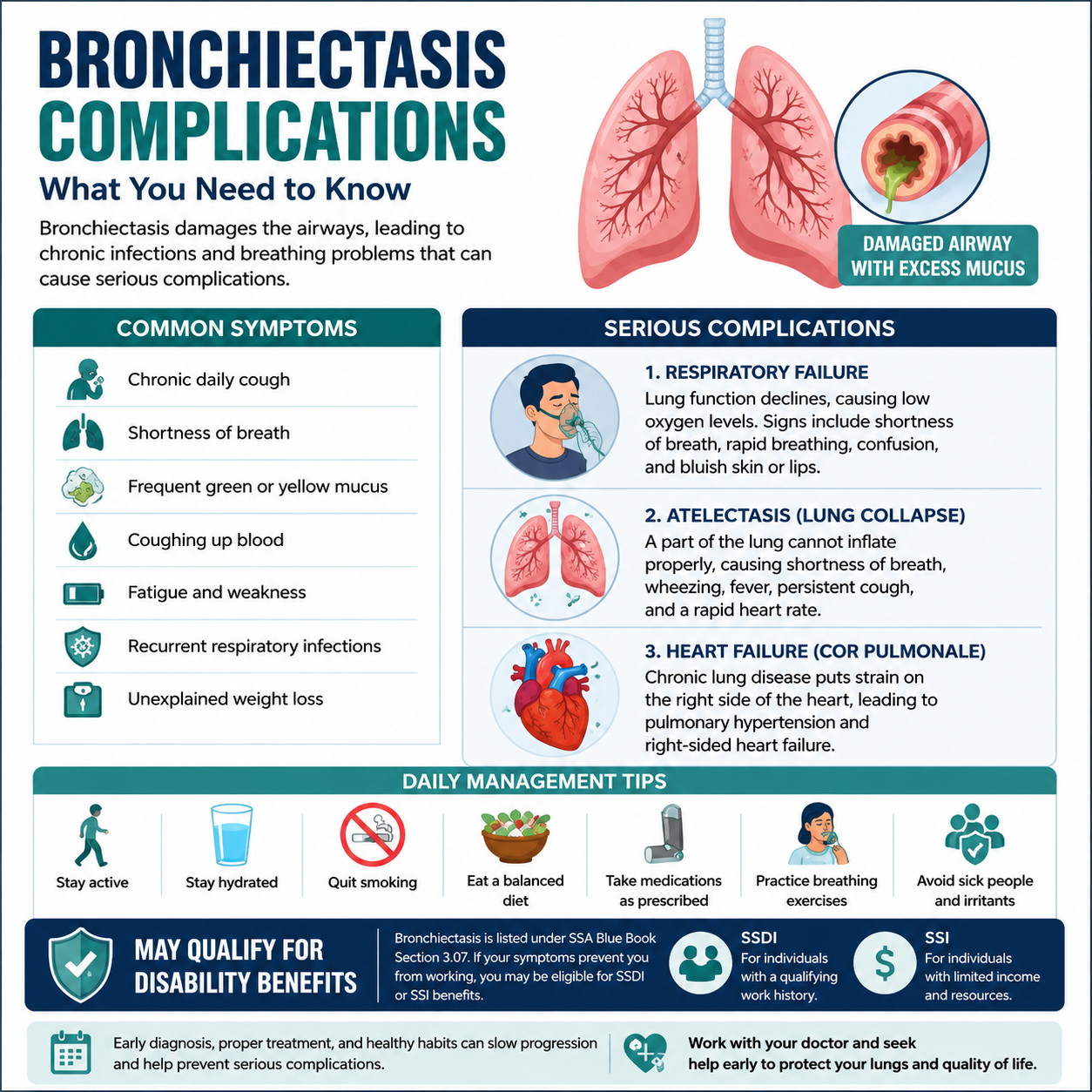
The symptoms of bronchiectasis can take several months or even years to develop. An individual diagnosed with the condition may experience the following symptoms:
- Chest pain and discomfort
- Weight loss
- Fatigue and tiredness
- Wheezing in the chest with breathing
- Dyspnea (shortness of breath)
- Chronic daily cough
- Coughing up blood (hemoptysis)
- Clubbing of the fingernails and toenails
- Recurrent respiratory infections
- Frequent and substantial production of green or yellow sputum
| If you encounter any of these symptoms, you should discuss them with your healthcare provider as soon as possible. Delaying treatment of bronchiectasis can lead to critical conditions down the road. Bronchiectasis is typically diagnosed through a computed tomography (CT) scan, which reveals characteristic abnormalities in the lung and bronchial tissues. Your doctor may also order pulmonary function tests (PFTs) to measure how well your lungs are working. These test results will also be critical if you later file a claim for bronchiectasis disability benefits with the SSA.
|
Can Bronchiectasis Be Cured?
There is no cure for this disorder, and early detection is important for managing it with appropriate treatments. It is a long-term, life-threatening condition that may affect the quality of an individual’s life permanently. If your healthcare professional says they believe that your condition will be long-lasting and become worse as time goes on, you can file a claim for disability for bronchiectasis.
A person who has been diagnosed with bronchiectasis should consider adopting the following healthy practices to decrease their risk of complications and control their symptoms:
- Walk regularly
- Stay hydrated
- Stop smoking
- Eat a balanced, healthy diet
- Take medications that relax the airways, such as bronchodilators
- Practice breathing exercises and chest physiotherapy
- Avoid coming into contact with people who are ill
- Avoid exposure to environmental irritants such as dust, fumes, and airborne pollutants, which can worsen symptoms and affect your ability to maintain employment
Complications of Bronchiectasis
Over time, the symptoms of bronchiectasis may worsen, and the condition can lead to various complications. Here are some of the critical complications that may require immediate attention and hospitalization.
Respiratory Failure
Here are some of the early signs of respiratory failure that you should never ignore:
- Excessive sleepiness
- Bluish skin and lips (cyanosis)
- The constant need for more air
- Shortness of breath
- Rapid breathing
The SSA evaluates respiratory failure under Blue Book Section 3.14. If your bronchiectasis has progressed to respiratory failure, this may provide an additional basis for a disability claim alongside or separate from the primary bronchiectasis listing under Section 3.07.
Atelectasis (Lung Collapse)
When one lung area fails to inhale correctly, the patient may experience this condition and the following symptoms:
- Shortness of breath
- Wheezing
- Fever
- Persistent cough
- Rapid breathing
- Rapid increase in heart rate
- Bluish lips and skin
Heart Failure (Cor Pulmonale)
Over time, bronchiectasis complications can damage the respiratory organs and raise the risk of critical heart conditions. Chronic strain on the lungs forces the right side of the heart to work harder, which can eventually lead to cor pulmonale, a form of right-sided heart failure.
Chronic pulmonary hypertension resulting from bronchiectasis is evaluated by the SSA under Blue Book Section 3.09. If you have developed heart complications alongside your bronchiectasis, both conditions may be considered together when the SSA determines your Residual Functional Capacity (RFC) and overall eligibility for benefits.
Is Bronchiectasis a Disability?
Yes. Bronchiectasis is officially listed in the Social Security Administration’s (SSA) Blue Book under Section 3.07, which is the dedicated listing for bronchiectasis, as well as Section 3.02, which covers chronic respiratory disorders more broadly.
To meet the SSA’s listing criteria under Section 3.07, you must show all of the following:
- Medical imaging (such as a CT scan) that confirms the presence of bronchiectasis; AND
- Exacerbations or complications requiring three separate hospitalizations within a 12-month period, each at least 30 days apart; AND
- Each hospitalization must have lasted at least 48 hours, including time spent in a hospital emergency department immediately before admission.
The 12-month period containing these hospitalizations must fall within the time frame the SSA is evaluating as part of your application or continuing disability review.
Patients who are suffering from this condition must present their medical records from at least the past 12 months as evidence to support their claims about the severity of the disease. The documents must show how frequently these episodes occur and the negative impact on the individual’s health. All the symptoms must be comprehensively documented so that nothing is missing in the report.
Does Bronchiectasis Qualify for Disability Benefits?
Bronchiectasis is a severe medical condition that has the potential to lead to severe complications. One can seek disability benefits as a means of financial support if they cannot work.
The SSA offers two types of benefits for individuals with bronchiectasis who cannot work:
| Benefit Type | SSDI (Social Security Disability Insurance) | SSI (Supplemental Security Income) |
| Who Qualifies | Individuals with bronchiectasis who can no longer work and have a qualifying work history | Individuals with bronchiectasis who have limited income and resources |
| Key Requirements | Typically requires at least 5 out of the last 10 years of full-time employment | Generally requires less than $2,000 in countable assets; household income may also be considered |
| How Benefits Are Determined | Monthly benefits are based on your lifetime earnings and Social Security tax contributions | Benefits are needs-based and determined by financial eligibility rather than work history |
How Does The Process Work?
In 2025, the SSA defines Substantial Gainful Activity (SGA) as earning more than $1,620 per month. If you are earning above this threshold, you will not qualify for SSDI or SSI benefits regardless of the severity of your medical condition.
The SSA will evaluate your medical documents and records to determine whether the severity of your condition would make you eligible for benefits. Here are the documents that may be required for you to prove the severity of your disabling condition:
- Written notes from healthcare professionals and specialists
- Prescription history and treatment record
- Hospital admission and discharge summaries
- Chest X-rays, CT scan reports, and pulmonary function test results
- Arterial blood gas (ABG) test results, if applicable
- A medical source statement from your treating physician explaining how your condition limits your ability to function and work
How Nationwide Disability Representatives Can Help
If your bronchiectasis has progressed to the point at which your symptoms are disabling and you can no longer earn a living, it is time to contact a disability attorney. Your attorney can help you determine whether you may qualify for benefits and guide you through every step of the process.
At Nationwide Disability Representatives, we handle everything from gathering medical evidence to representing you at hearings. We work on a contingency basis, meaning you pay nothing unless we win.
Call us today at 800-572-3753 or fill out our free online consultation form. We promise we can help.