seo
Updated November 12, 2021
14 min read

Yes, children and adults with an intellectual disability may qualify for disability benefits if their condition significantly affects daily functioning, learning, communication, or work ability.
Caring for a loved one with an intellectual disability can be emotionally, physically, and financially demanding. Families often face ongoing medical appointments, educational challenges, therapy costs, and concerns about long-term care and independence.
Estimates vary by source and age group, but research suggests intellectual disability affects about 1% of the population, with roughly 85% of cases classified as mild; in some high-income countries, childhood prevalence estimates range from 2–3%. However, many families also face lengthy waits for behavioral health services, while people with intellectual and developmental disabilities often face significant healthcare and dental care gaps throughout their lives.
While intellectual disability is often diagnosed during childhood, many individuals continue to need support and may qualify for disability benefits as adults. This guide explains how SSA evaluates claims for both children and adults with intellectual disabilities.
Key Takeaway
|
What Does It Mean To Have An Intellectual Disability?
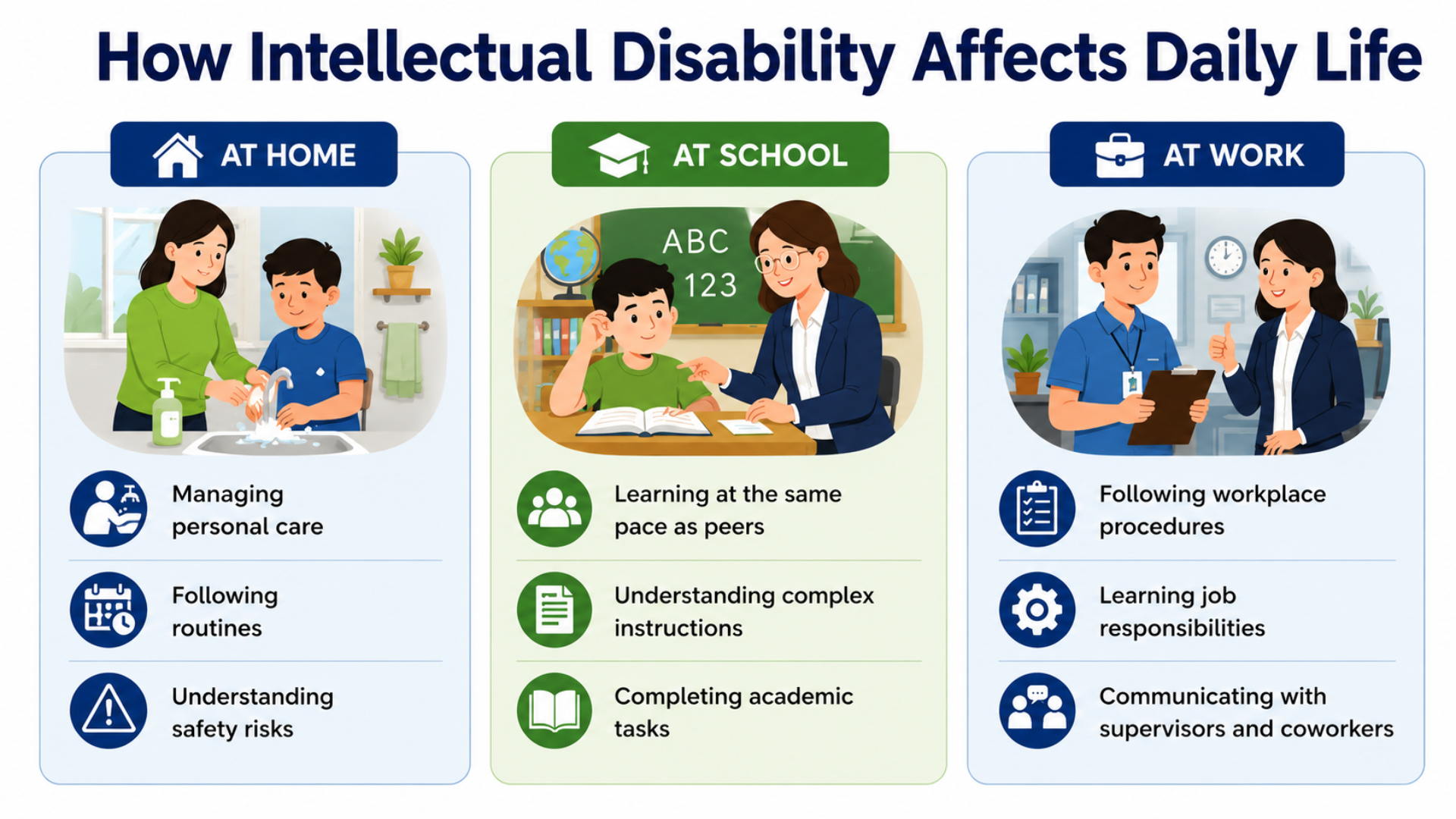
An intellectual disability is a neurodevelopmental disorder that affects a person’s ability to learn, reason, solve problems, and adapt to everyday life. Limitations typically begin during the developmental period (before age 22) and continue into adulthood; for SSA eligibility, they must begin before age 22 and be significant and long-term.
When someone is considered intellectually disabled, they generally experience challenges in two primary areas:
- Intellectual functioning
- Adaptive functioning
Intellectual Functioning
Intellectual functioning refers to mental abilities such as:
- Learning new information
- Problem-solving
- Reasoning
- Planning
- Understanding concepts
- Decision-making
People with intellectual disabilities may require additional time, instruction, or support to perform these tasks.
Adaptive Functioning
Adaptive functioning involves the practical, social, and conceptual skills needed for daily living.
Examples include:
- Communication skills
- Personal hygiene
- Managing money
- Following instructions
- Social interactions
- Independent living skills
- Workplace responsibilities
The severity and daily impact vary widely; some individuals live with minimal support, while others need ongoing, intensive assistance. Diagnosis relies on standardized cognitive testing and adaptive behavior assessments, not just observed challenges.
Why does this matter for SSA claims?
SSA requires evidence of onset before age 22 and documentation of significant limitations in intellectual and adaptive functioning (e.g., IQ and adaptive assessments, school records, caregiver statements).
Can You Qualify For SSDI Or SSI With An Intellectual Disability?
Yes. Many individuals with intellectual disabilities may qualify for Social Security disability benefits if their condition meets the SSA’s medical and financial requirements.
The specific program available often depends on a person’s age, work history, and financial circumstances.
SSI Benefits For Intellectual Disability
Supplemental Security Income (SSI) is a needs-based program designed for individuals with limited income and resources.
A child or adult with an intellectual disability may qualify for SSI if:
- Their condition meets SSA disability standards.
- They have limited income and assets.
- Their disability significantly limits daily functioning.
Many children with intellectual disabilities receive SSI benefits because they have not yet developed a work history.
SSDI Benefits For Intellectual Disability
Social Security Disability Insurance (SSDI) is available to individuals who have worked and paid Social Security taxes long enough to earn work credits.
Adults with intellectual disabilities may qualify for SSDI if:
- They have sufficient work credits, or
- They qualify under certain dependent adult child benefit provisions based on a parent’s earnings record.
Unlike SSI, SSDI eligibility is not primarily based on financial need.
What benefits are available for children with an intellectual disability?
Children with intellectual disabilities may qualify for SSI when their condition causes marked and severe functional limitations.
SSA evaluates:
- Medical records
- School records (e.g., IEPs)
- Psychological evaluations
- Teacher reports
- Daily functioning
The agency looks at how the child’s condition affects learning, communication, behavior, and age-appropriate activities.
| Did You Know? Adults with an intellectual disability may qualify for Disabled Adult Child (DAC) benefits if their disability began before age 22 and a parent receives Social Security retirement, disability, or survivor benefits. DAC benefits are based on the parent’s work record and may also provide Medicare eligibility after 24 months, with no asset limits like SSI. |
What benefits are available for Adults with an intellectual disability?
Adults with intellectual disabilities must generally show that their condition prevents them from performing substantial work activity.
According to Social Security Administration research, people with intellectual disabilities account for approximately 14% of all working-age SSI and SSDI beneficiaries.
When reviewing adult claims, SSA evaluates:
- Medical evidence
- Educational history
- caregiver statements
- Functional limitations
- Work history
- Ability to adapt to workplace demands
In addition to meeting medical requirements, applicants must provide evidence showing how their intellectual disability affects learning, communication, decision-making, social interactions, and independent functioning.
Understanding SGA, RFC, and Medical-Vocational Allowance
Several important SSA terms often appear during the disability process.
Substantial Gainful Activity (SGA)
Substantial Gainful Activity (SGA) refers to a level of work and earnings that SSA considers significant employment.
If a person earns above the SGA limit, they may not qualify for disability benefits regardless of their diagnosis.
Residual Functional Capacity (RFC)
Residual Functional Capacity (RFC) is an assessment of what a person can still do despite their limitations.
For intellectual disability claims, SSA may evaluate a person’s ability to:
- Understand instructions
- Concentrate on tasks
- Interact with others
- Adapt to workplace changes
- Make work-related decisions
Medical-Vocational Allowance
Even if a person does not meet a specific SSA listing, they may still qualify through a Medical-Vocational Allowance.
This occurs when SSA determines that a person’s limitations, age, education, and work experience make it difficult to maintain substantial employment.
How Does SSA Evaluate Intellectual Disability Claims?
The Social Security Administration uses specific medical criteria when evaluating disability claims involving intellectual disability. The agency reviews both medical evidence and functional limitations to determine whether a person’s condition meets disability requirements.
Understanding SSA Listing 12.05
Intellectual disability claims are primarily evaluated under SSA Listing 12.05, which addresses intellectual disorders.
To qualify under this listing, applicants generally must provide evidence showing:
- Significantly below-average intellectual functioning
- Deficits in adaptive functioning
- Symptoms that began during the developmental period
- Limitations that affect daily activities, social functioning, or employment
Meeting Listing 12.05 can significantly strengthen a disability claim, but approval still depends on supporting medical and functional evidence.
What Medical Evidence Does SSA Require?
Strong documentation is one of the most important factors in a successful disability claim.
- IQ Testing — measures cognitive functioning
- School Records (including IEPs) — demonstrate lifelong impairment and educational impacts
- Psychological Evaluations — confirm diagnosis and severity
- Medical Records — document treatment history and medical conditions
- Functional Assessments — show daily limitations and adaptive functioning deficits
- Caregiver Statements — describe real-world functioning and support needs
How Functional Limitations Affect Eligibility
SSA does not evaluate IQ scores alone. The agency also considers how the condition affects everyday functioning.
Examples of functional limitations include:
- Difficulty communicating effectively
- Problems following instructions
- Challenges in managing personal care
- Limited independent living skills
- Difficulty maintaining employment
- Social interaction challenges
The more clearly these limitations are documented, the stronger a disability claim may be.
What Are The Common Causes Of Intellectual Disabilities?
Intellectual disabilities can develop before birth, during delivery, or later in childhood. In many cases, the exact cause may never be identified. Understanding the possible causes can help families seek early intervention, treatment, and support services.
Genetic Conditions
Some intellectual disabilities are linked to inherited or genetic conditions that affect brain development. Common examples include:
- Down syndrome
- Fragile X syndrome
- Rett syndrome (often due to MECP2 mutations; many cases are sporadic)
- Certain metabolic disorders
These conditions may affect learning, communication, memory, and adaptive functioning from an early age.
Pregnancy and Birth Complications
Problems during pregnancy or childbirth can sometimes affect a child’s brain development. Examples include:
- Exposure to alcohol or drugs during pregnancy
- Severe maternal infections
- Premature birth
- Low birth weight
- Lack of oxygen during delivery
Early medical care can reduce risks, but some complications may result in long-term developmental challenges.
Childhood Illnesses and Brain Injuries
Certain illnesses or injuries that occur during childhood may contribute to intellectual disabilities, including:
- Meningitis
- Encephalitis
- Severe head injuries
- Seizure disorders
- Exposure to toxins such as lead
The severity of cognitive impairment often depends on the timing and extent of the injury or illness.
Environmental and Developmental Factors
Environmental influences may also play a role. Factors such as severe malnutrition, chronic neglect, lack of early developmental support, and exposure to harmful substances can affect cognitive development in some children.
How Is An Intellectual Disability Diagnosed In Children?
An intellectual disability diagnosis typically involves developmental screenings, standardized IQ testing, adaptive behavior assessments (e.g., Vineland-3), school evaluations (IEPs), and medical/psychological examinations. The process includes:
- Developmental milestone assessments
- Intelligence testing (IQ tests)
- Adaptive behavior evaluations
- Educational assessments
- Medical examinations
- Psychological evaluations
A team (doctors, psychologists, educators, therapists) determines whether the child meets the criteria. Early diagnosis helps families access specialized education, therapies, community resources, and financial assistance sooner.
What Are The Different Types Of Intellectual Disabilities?
Intellectual disabilities are commonly categorized according to IQ scores and the level of support an individual requires in daily life. Understanding the different classifications can help families better understand care needs and long-term planning requirements.
Mild Intellectual Disability
Mild intellectual disability is the most common classification and accounts for approximately 85% of cases.
Individuals with mild intellectual disabilities often:
- Learn academic skills at a slower pace
- Need some assistance with complex tasks
- Can develop independent living skills
- May maintain employment with limited support
Many adults with mild intellectual disabilities live independently or semi-independently with appropriate resources and guidance.
Moderate Intellectual Disability
People with moderate intellectual disability generally require ongoing support with daily activities and decision-making.
Common characteristics include:
- Noticeable delays in communication and learning
- Difficulty with complex problem-solving
- Need for supervised living arrangements in some cases
- Ability to learn practical life skills with training
Many individuals can participate in supported employment programs and community activities.
Severe Intellectual Disability
Severe intellectual disability significantly affects communication, learning, and daily functioning.
Individuals may:
- Require substantial assistance throughout life
- Have limited verbal communication abilities
- Need support with personal care and safety
- Depend on caregivers for many daily tasks
Specialized educational and therapeutic services are often essential.
Profound Intellectual Disability
Profound intellectual disability is the rarest and most severe classification.
Individuals with profound intellectual disabilities typically:
- Require lifelong, full-time care
- Have significant physical and cognitive limitations
- Need assistance with all aspects of daily living
- Depend heavily on caregivers and medical professionals
Comprehensive support services are often necessary to meet their ongoing needs.
These classifications are among the most recognized types of intellectual disability and types of intellectual disabilities in adults used by healthcare professionals and support organizations.
What Support Services Are Available For Adults With Intellectual Disabilities?
Many adults with intellectual disabilities benefit from support programs that help them live more independently, participate in their communities, and maintain employment. These services often work alongside SSI or SSDI benefits and can improve overall quality of life.
Some of the most common support services and resources for adults with intellectual disabilities include:
Medicaid Waivers
Medicaid waiver programs can help cover services that are not typically included under standard Medicaid coverage. Depending on the state, these services may include personal care assistance, transportation, respite care, and supported living programs.
Vocational Rehabilitation
Vocational rehabilitation programs help individuals prepare for, obtain, and maintain employment. Services may include job training, career counseling, and workplace accommodations.
Supported Employment Programs
Supported employment programs provide ongoing assistance for individuals who need help performing job duties or adjusting to workplace expectations. Job coaches may work directly with employees and employers to promote long-term success.
Community-Based Services
Many communities offer programs that support social engagement, life skills development, recreation, and independent living. These programs can help individuals build confidence and strengthen daily living skills.
Independent Living Assistance
Independent living services may help with budgeting, transportation, meal preparation, and household management. These supports can increase independence while ensuring appropriate levels of supervision and assistance.
How to Support Someone With an Intellectual Disability in the Workplace
Meaningful employment can improve self-confidence, financial stability, and social connections for individuals with intellectual disabilities. Employers and coworkers can play an important role in creating a supportive work environment.
Workplace Accommodations
Reasonable accommodations may help employees perform essential job functions more effectively. Examples include simplified instructions, modified training materials, flexible scheduling, or assistive technology.
| What You Should Know? Understanding your workplace rights can help you request accommodations and address discrimination. EEOC guidance helps employees and employers create a more supportive and inclusive work environment for people with intellectual and developmental disabilities. |
Job Coaching
Some workers benefit from job coaches who provide guidance, training, and ongoing support. A job coach can help employees learn tasks, improve communication skills, and navigate workplace expectations.
Communication Strategies
Clear, straightforward communication can improve workplace success. Employers should provide instructions in a way that matches the employee’s learning style and allow time for questions when needed.
Employer Responsibilities
Employers must comply with federal anti-discrimination laws and evaluate accommodation requests fairly. Creating an inclusive workplace benefits both employees and organizations.
What Should You Do If Your Disability Claim Is Denied?
If your disability claim is denied, you should file an appeal within 60 days of getting the denial letter from SSA.
In Fiscal Year 2023, approximately 62% of Social Security disability claims were initially denied. However, many people are later approved after submitting additional medical evidence or completing the appeals process. Taking action quickly and providing strong supporting records can improve your chances of receiving benefits.
Understanding the Disability Appeals Process
If your claim is denied, you can ask SSA to review the decision through several levels of appeal:
- Reconsideration – A different SSA reviewer takes a fresh look at your claim, including any new evidence you provide.
- Administrative Law Judge (ALJ) Hearing – If your claim is denied again, you can request a hearing before an Administrative Law Judge who will review your case, listen to testimony, and evaluate the evidence independently.
- Appeals Council Review – If you disagree with the ALJ’s decision, you may ask the Appeals Council to review whether the hearing was handled correctly.
- Federal Court Review – If the Appeals Council denies your request or upholds the decision, you may file a lawsuit in federal court for a final review of your case.
Note: Because the appeals process can be complicated, many applicants also choose to seek help from a disability representative who can assist with gathering evidence, completing paperwork, and meeting important deadlines.
Tips For Parents Of A Child Newly Diagnosed With An Intellectual Disability

A new diagnosis can feel overwhelming. While every child’s needs are different, taking proactive steps early can help families access valuable support and services.
Seek a Comprehensive Evaluation
A complete evaluation can help identify your child’s strengths, challenges, and support needs.
Build Medical Documentation Early
Keep copies of medical records, psychological evaluations, therapy reports, and educational assessments. Strong documentation can be important when applying for services or benefits.
Explore Educational Support Programs
Many children qualify for specialized educational services through their school system. Early intervention can improve learning and developmental outcomes.
Understand SSI Eligibility Options
Some children with significant functional limitations may qualify for Supplemental Security Income (SSI) benefits.
Connect With Local Support Organizations
Community organizations can provide resources, guidance, support groups, and educational opportunities for families.
Track Daily Functional Challenges
Keeping a journal of communication difficulties, learning challenges, and daily living limitations may be helpful when seeking services or disability benefits.
Plan for Long-Term Care Needs
As children grow older, families should begin considering future education, employment, housing, and healthcare needs.
Early planning can make it easier to secure resources and build a strong support network for the future.
Taking the Next Step
Living with an intellectual disability can create lifelong challenges, but financial assistance and support services may be available. Understanding eligibility requirements, gathering strong medical evidence, and knowing your appeal rights can help families make informed decisions.
If you or a loved one needs help applying for disability benefits or appealing a denied claim, Nationwide Disability Representatives is here to help. Contact our team today for a free consultation and guidance through every step of the disability claims process.