admin
Updated April 21, 2023
7 min read
Summary
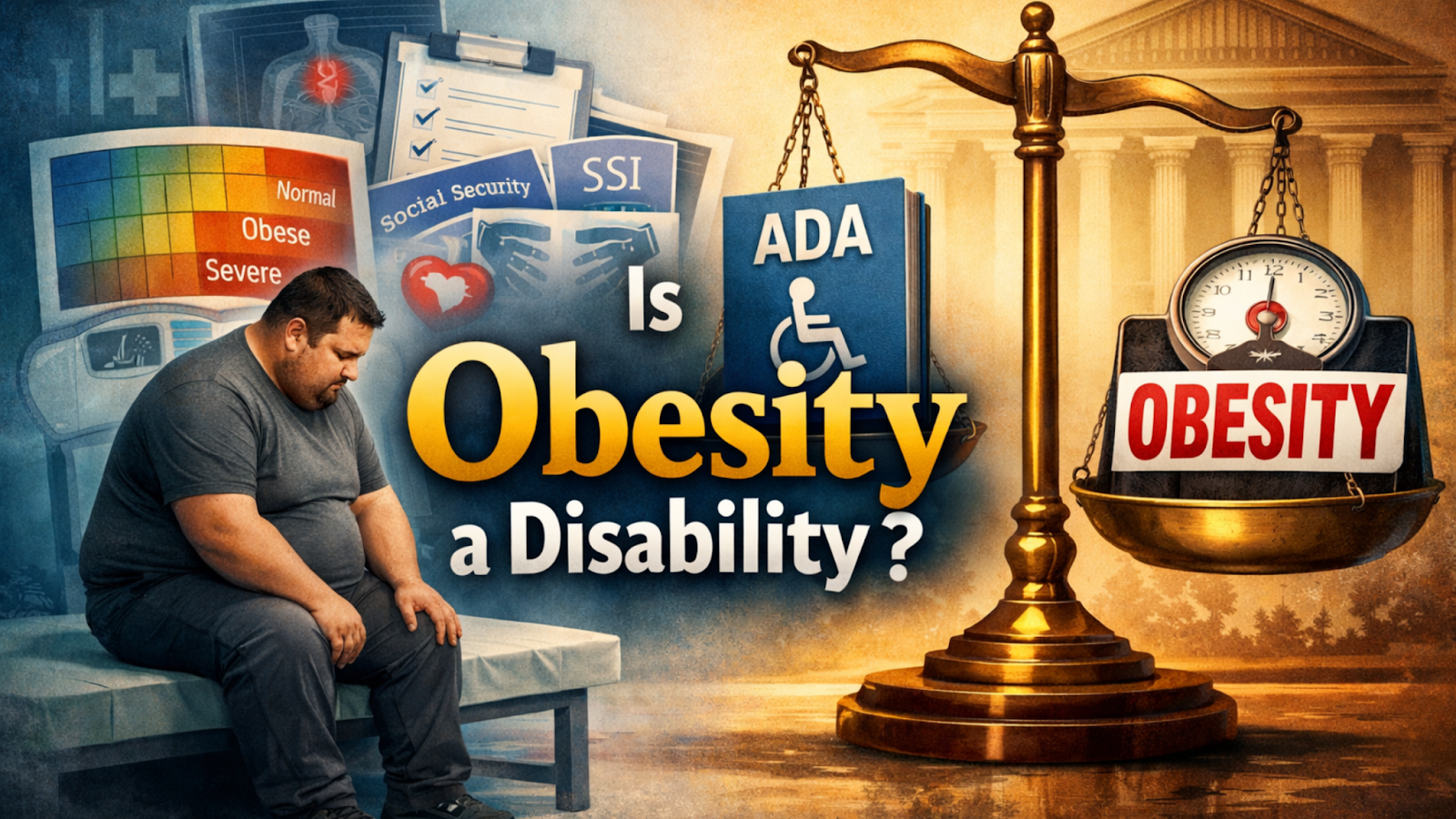
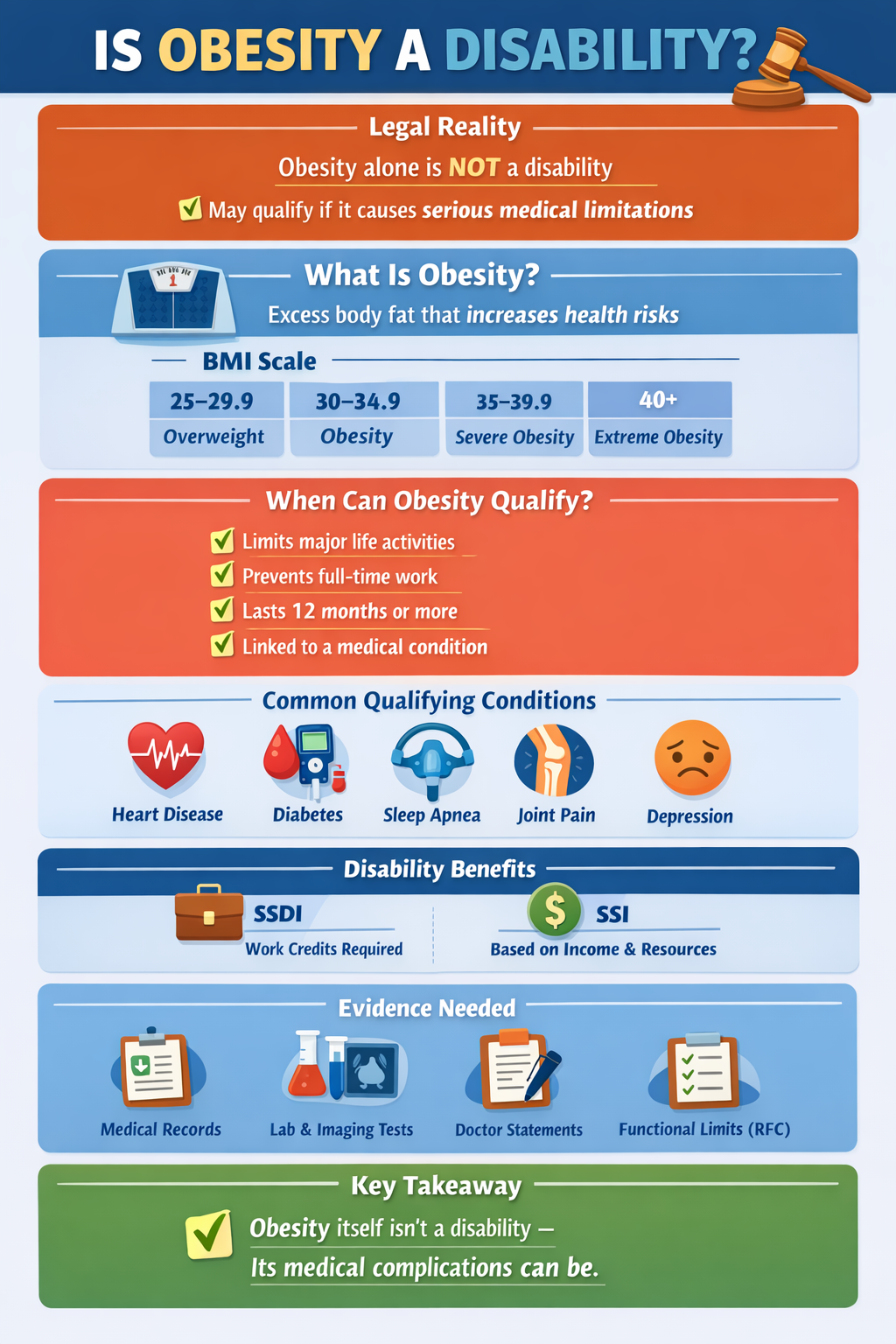
Obesity alone is not automatically a disability under U.S. law. It may qualify if it causes or worsens a medical condition that limits major life activities or work. Severe obesity linked to heart disease, diabetes, sleep apnea, or joint disorders can lead to SSDI or SSI benefits, provided applicants submit supporting medical evidence and functional assessments.
According to the 7th U.S. Circuit Court of Appeals, obesity may not be considered an impairment under the Americans with Disabilities Act (ADA) when there is no proper evidence of a physiological disorder.
According to the ADA, disability is an impairment that substantially limits one or more major life activities.
Can you get a disability for being obese? In some cases, severe obesity is a disability. However, it is not always the case.
In other contexts, such as employment or insurance, obesity may be considered a disability if it meets certain criteria, such as substantially affecting a person’s ability to perform job duties or engage in daily activities.
What is Obesity?
Obesity is a condition where excessive or abnormal fat accumulation poses a serious health risk.
| BMI (kg/m²) | Weight Category |
|---|---|
| Below 18.5 | Underweight |
| 18.5 – 24.9 | Normal Weight |
| 25.0 – 29.9 | Overweight |
| 30.0 – 34.9 | Obesity (Class I) |
| 35.0 – 39.9 | Severe Obesity (Class II) |
| 40.0 and above | Morbid/Extreme Obesity (Class III) |
Obesity can be a complex condition, with several factors contributing to it, including a person’s genetics, environment, and behavior. Being overweight or obese can also increase the risk of numerous health problems, including heart disease, diabetes, and some forms of cancer. More than 4 million people died in 2017 due to complications from being overweight or obese, according to the World Health Organization (WHO).
Obesity treatment may involve a combination of lifestyle changes, such as increasing physical activity and improving diet. Sometimes, it may require medical interventions, such as medication or weight-loss surgery.
Causes of Obesity
Although obesity is more common in adults, the growing prevalence of obesity in children has become a significant public health concern. Factors that contribute to obesity may include:
- Eating patterns
- Physical activity levels
- Sleep routines
- Genetics
- Certain medications
- Environmental factors
- Medical conditions
- Psychological factors
Excessive weight can also cause breathing and gastrointestinal problems, including gallstones.
Can You Get Disability Benefits for Obesity?
Obesity alone is not enough to qualify for Social Security disability benefits. Instead, an applicant must show that obesity has led to a disabling condition outlined in the Social Security Administration (SSA) Blue Book, the agency’s guidebook for disabling conditions.
If you are severely obese and applying for disability benefits, you will need to show that your obesity has led to an eligible medical condition that prevents you from working for at least 12 months. The SSA recognizes various conditions that are commonly associated with obesity, such as heart disease, hypothyroidism, depression, diabetes, sleep apnea, narcolepsy, and rheumatoid arthritis.
If you can demonstrate that an eligible condition related to your weight makes it impossible to engage in day-to-day activities, you may be eligible for disability benefits for obesity.
Medically Qualifying Conditions for Obesity
Obesity can cause medically qualifying conditions for disability benefits, but obtaining approval often requires additional medical evidence beyond a diagnosis alone. Applicants may need to provide evidence such as test results, doctors’ reports, and imaging tests to support their claim.
A Residual Functional Capacity (RFC) analysis, which is a detailed evaluation of your functional abilities, may be used to support your claim for disability benefits due to obesity. The assessment may examine various factors that are relevant to your application, such as:
- Heart function test results
- Stress level test results
- Lab tests showing cholesterol and diabetes levels
- BMI reports
- Surgical and hospitalization records (if applicable)
- Imaging tests to show musculoskeletal complications
- Psychological evaluation reports
- Respiratory complication reports
What Disability Benefits Are Available for Obesity?
If your obesity or obesity-related medical condition prevents you from working, you may qualify for obesity disability benefits. While obesity itself is not listed as a standalone impairment, you may get obesity disability benefits if excess weight contributes to serious, long-term limitations.
The SSA offers the following two primary disability programs:
Social Security Disability Insurance (SSDI)
If you have paid Social Security taxes and you have sufficient work credits, you may be eligible for Social Security Disability Insurance (SSDI). To qualify for these benefits, you need to show that obesity is the cause of your disabling medical condition, such as heart disease, severe joint disorders, diabetes complications, or sleep apnea. The condition prevents you from engaging in substantial gainful activity for at least 12 months. For more information, read our complete SSDI guide.
Supplemental Security Income (SSI)
If you have limited income and financial resources, you may qualify for SSI, which does not require prior work credits. You must meet income, resource, and medical requirements.
If your SSI application is approved, you will receive monthly financial assistance.
How to Apply for Disability Benefits for Obesity
To apply for disability benefits related to obesity, you may want to consider these general steps:
Gather medical records
You will need to provide medical evidence to support your claim for disability benefits related to obesity. This may include medical records, doctors’ notes, and test results.
Submit an application
You can apply for disability benefits online through the SSA’s website, by phone, or in person at a local SSA office.
Provide additional information
The SSA may request additional information to support your claims, such as more detailed medical records or information about your work history.
An applicant can apply for two types of disability benefits: Social Security Disability Insurance (SSDI) and Supplemental Security Income (SSI).
How Much Does Disability Pay for Obesity?
The amount of disability pay an individual can receive for obesity through SSDI, or SSI, depends on several factors, including their work history, age, and other sources of income.
For SSDI, the amount of the monthly benefit is based on a person’s lifetime average earnings before they became disabled. As of 2025, the average SSDI payment is approximately $1,580 per month, while the maximum monthly benefit can be about $4,018, depending on a person’s work history and earnings record.
For SSI, the maximum federal benefit amount in 2025 is $967 per month for an individual and $1,450 per month for a couple. The actual amount may be lower depending on income, financial resources, and living arrangements.
Need Legal Help? Contact an experienced disability law firm.
A Miami disability lawyer can guide you through the process and fight on your behalf if your disability claim is denied. Schedule a free, no-obligation consultation by calling us today at 239-549-6689.