admin
Updated December 9, 2025
6 min read

If you’re receiving Social Security Disability Insurance (SSDI) or Supplemental Security Income (SSI), the idea of taking on part-time work or a side hustle can spark both hope and fear.
Hope – because extra income could ease the financial stress.
Fear – because you’ve heard stories of people losing their benefits for working “too much.”
However, the reality is that the rules are not as simple as many think. The Social Security Administration (SSA) sets strict income limits that change each year. For example, in 2025, the SGA threshold is $1,620 per month for non-blind individuals and $2,700 per month for blind individuals. Go over that line, and your benefits will be at risk.
So, how do you know which is “safe”?
Don’t worry!
By the end of this guide, you’ll know exactly how to balance work opportunities while protecting the disability benefits you rely on.
1. What Are Disability Benefits and Who Qualifies?
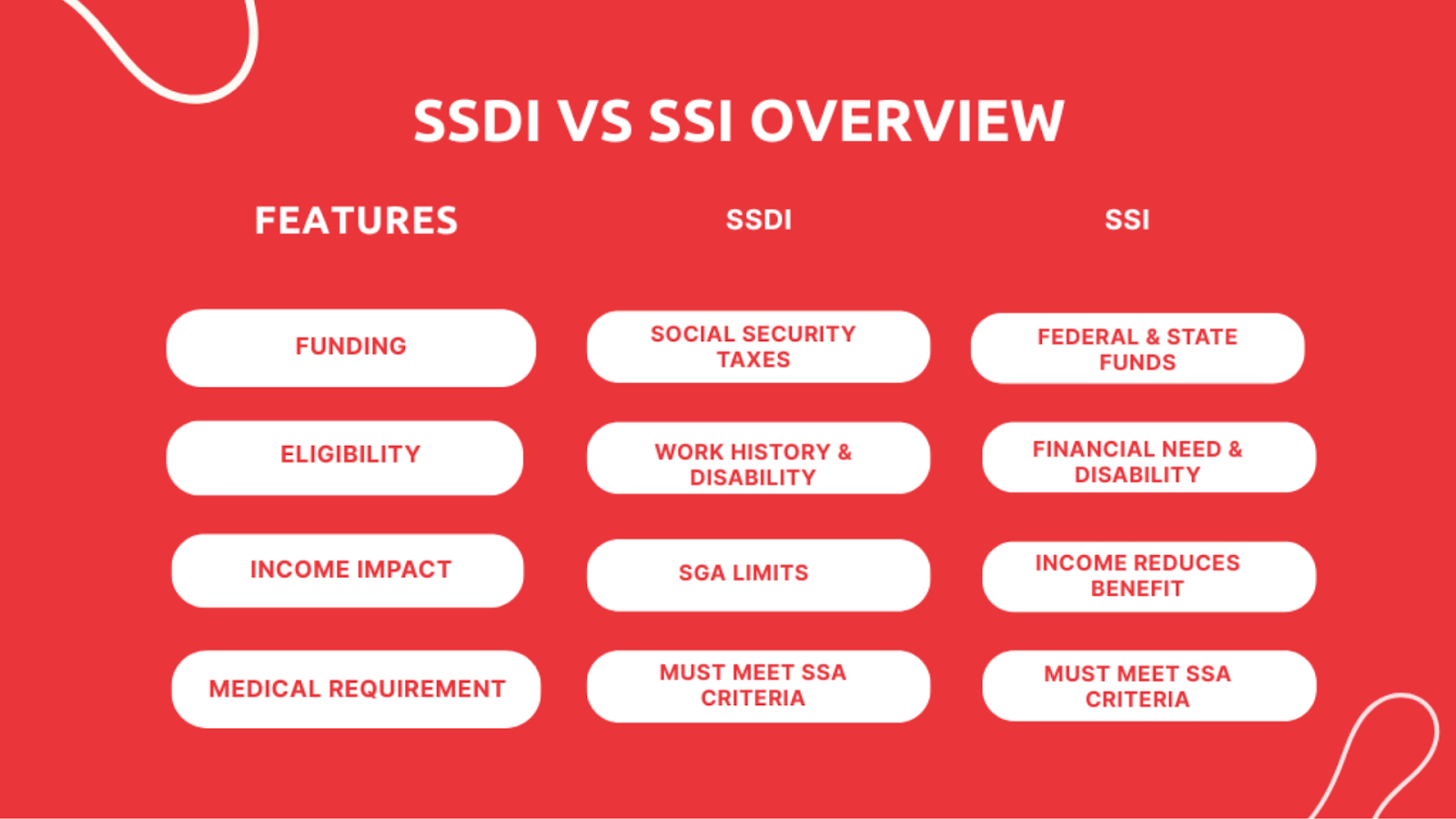
Disability benefits exist to support those individuals who cannot work due to medical conditions. Therefore, there are two primary programs, i.e, SSDI and SSI, but they have different eligibility rules:
SSDI (Social Security Disability Insurance)
SSDI provides benefits to individuals who have worked and paid Social Security taxes. Eligibility is determined based on a combination of work history and age at the time of disability onset.
Work History and Number of Credits Needed for Disability Benefits
Before age 24: 6 credits earned in the 3 years prior of your disability.
Age 24 – 30: Credits equal to half the time between age 21 and the time your disability began. For example, if you became disabled at 27, you would need approximately 3 years of work (12 credits) out of the last 6 years (between the ages of 21 and 27).
Age 31 or Older: You usually need at least 20 work credits earned in the 10 years before your disability began.
In 2025, one credit is earned for every $1,810 in earnings, up to a maximum of four credits per year.
SSI (Supplemental Security Income)
SSI is a needs-based program for individuals with limited income and resources, regardless of work history. Eligibility is determined by financial criteria and disability status.
Income and Resource Limits
SSI helps individuals and children with limited income and resources. You may qualify if:
- Income is Low: Usually under $2,019/month, including wages, benefits, or pensions.
- Resources are Limited: Generally, below $2,000 for individuals and $3,000 for couples.
- Disability, blindness, or age 65+: If under 65, the disability must affect work for at least a year. Additionally, adults 65+ can qualify without a disability.
Tip : Some income and resources don’t count, so check with SSA to avoid losing benefits
2. How Does Work Affect SSDI Benefits?
Many people wonder, “Will I lose my disability if I work part-time?” The good news is you can often work without losing SSDI benefits, as long as you understand key rules on earnings and reporting.
Substantial Gainful Activity (SGA)
This is the earnings limit above which your SSDI benefits could be affected.
In 2025, the SGA limit is $1,620/month for non-blind individuals and $2,700/month for those considered blind.
For example : If you earn $1,500 a month from a part-time job, you’re under the SGA, and benefits continue. If you earn $1,700, that’s above SGA, and SSA may review your case.
Trial Work Period (TWP)
TWP lets you test returning to work without losing SSDI, even if you earn above SGA.
- In 2025, any month you earn $1,160 or more (before taxes) counts as a TWP month.
- You get 9 TWP months within a rolling 60-month window.
For example : You accept a side gig making $1,300 one month. That month counts toward your 9 TWP months, but you still receive full SSDI benefits.
Extended Period of Eligibility (EPE)
After the TWP, you enter a 36-month “extended” window.
During EPE:
- If your earnings are below the SGA limit, benefits continue.
- If your earnings exceed SGA, benefits may stop—but if your income drops later, benefits can restart without a new application.
For example : You exceed SGA for a few months, and benefits pause. Later, your earnings drop below $1,620, and benefits resume.
Work-Related Expenses
SSA allows you to deduct disability-related work costs from your earnings. This can help you stay under SGA.
Common Deductible Expenses
- Adaptive equipment (wheelchair desk, screen reader)
- Accessible transportation
- Personal care aide at work
For example : You earn $1,700 but spend $200 monthly on specialized equipment. SSA counts $1,500, so you remain under SGA.
3. How Does Work Affect SSI Benefits?
Working while on SSI reduces your monthly benefit, but SSA rules allow partial income without losing eligibility.
Income Deduction Rules
SSI reduces benefits based on your income. The SSA allows:
- Keep the first $65 of earned income
- Reduce your SSI payment by 50% of your remaining earnings
Many people ask Can you work part-time on SSI, or Can I work a part-time job on disability. The rules are specific but allow for part-time work without full loss of benefits.
For example : Earn $500/month → $65 ignored, half of the remaining $435 ($217.50) reduces your benefit.
State Variations
- SSI benefits may differ by state due to supplemental payments.
- Some states add extra funds for individuals or couples, slightly increasing monthly benefits.
Work Incentives
- Programs like Expedited Reinstatement (EXR) allow you to quickly resume SSI if your income drops after a work attempt.
- Impairment-Related Work Expenses (IRWEs) and other deductions help you keep more of your benefit while working.
For example : Spending $200/month on a needed device reduces countable income, helping you stay under benefit limits.
What Are the Reporting Requirements for Work and Income?
All income and work activity must be reported to the SSA. Failure to report can result in:
- Overpayments that must be repaid
- Penalties or even loss of benefits
You should inform SSA about:
- Part-time jobs
- Freelance or side gigs
- Changes in wages, hours, or work status
How Can You Work Without Losing Disability Benefits?
- Use Trial Work Periods strategically to test your ability to work while retaining SSDI benefits
- Deduct disability-related expenses to remain under SGA limits
- Consult SSA or a disability attorney for personalized advice
- Plan side gigs carefully, monitoring income to avoid exceeding limits
- Utilize SSA work incentives like EXR and PASS to maximize earning potential without losing benefits
Conclusion
Balancing work while on SSDI or SSI can feel overwhelming, but with the right planning, you can earn income without risking your benefits. Understanding rules such as SGA limits, trial work periods, and proper reporting is key to staying protected.
At Nationwide Disability Representatives, we help individuals across the U.S. navigate these complex rules and safeguard their benefits. Don’t take chances with your financial security—contact us today for a free consultation and let our team guide you every step of the way.