admin
Updated September 4, 2025
7 min read

Key Takeaways
|
Life is unpredictable. One moment you’re working, providing for your family, and building your future. The next debilitating illness or injury changes everything.
If you’re no longer able to work due to a medical condition, the financial strain can be as overwhelming as the physical and emotional challenges.
We know how difficult this journey can be, and our role is to help you navigate the complexities of Social Security Disability benefits.
Here’s your guide to understanding which conditions may qualify for disability benefits, how the Social Security Administration (SSA) defines “disability,” and how you can apply for the support you need and deserve.
What Are Social Security Disability Benefits?
Before we delve into specific conditions, it’s important to understand the two main types of disability benefits offered by the SSA:
- Social Security Disability Insurance (SSDI): This is for individuals who have worked and paid Social Security taxes for a certain amount of time.
- Supplemental Security Income (SSI): This is a needs-based program for those with limited income and resources, regardless of their work history.
The medical requirements for both programs are the same.
What Is The Easiest Condition To Get Disability For?

This is a common question, but there’s no simple answer. The SSA doesn’t approve claims based on a condition, but rather on its severity and how it impacts your ability to work. However, some conditions are more likely to be approved quickly, especially if they are listed in the SSA’s “Blue Book.”
The Blue Book, also known as the Listing of Impairments, is a list of medical conditions that the SSA considers severe enough to prevent an individual from working. If your condition is in the Blue Book and you meet the specific criteria, your claim is more likely to be approved.
What Medical Conditions Qualify For Disability?
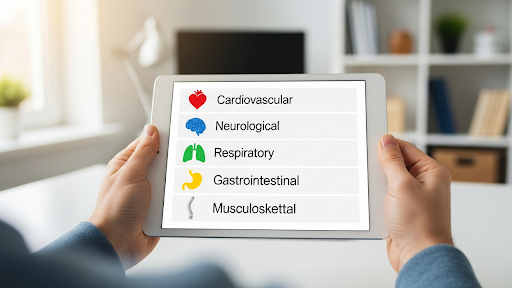
The Social Security Administration (SSA) uses a medical guide, often called the “Blue Book,” to evaluate disability claims. To be approved, your condition must be severe enough to prevent you from working for at least 12 months.
To help applicants, the SSA organizes all qualifying impairments into 14 official categories.
The SSA’s 14 Official Disability Categories
Find the category below that relates to your condition to see common examples.
| Category (from SSA Blue Book) | Common Examples of Conditions |
| 1. Musculoskeletal System | Back injuries, arthritis, fibromyalgia, spinal stenosis, degenerative disc disease |
| 2. Special Senses and Speech | Statutory blindness, hearing loss, Meniere’s disease, speech impediments |
| 3. Respiratory Disorders | COPD, severe asthma, cystic fibrosis, pulmonary hypertension |
| 4. Cardiovascular System | Congestive heart failure, coronary artery disease, arrhythmia, and congenital heart defects |
| 5. Digestive System | Crohn’s disease, inflammatory bowel disease (IBD), and chronic liver disease |
| 6. Genitourinary Disorders | Chronic kidney disease requiring dialysis, nephrotic syndrome |
| 7. Hematological Disorders | Sickle cell disease, anemia, bone marrow failure, and blood clotting disorders |
| 8. Skin Disorders | Severe burns, chronic skin infections, dermatitis, psoriasis |
| 9. Endocrine Disorders | Diabetes with complications (like neuropathy or vision loss), thyroid disorders |
| 10. Congenital Disorders | Down syndrome, cerebral palsy, and muscular dystrophy |
| 11. Neurological Disorders | Multiple sclerosis (MS), epilepsy, Parkinson’s disease, ALS, traumatic brain injuries |
| 12. Mental Disorders | Depression, anxiety, PTSD, bipolar disorder, schizophrenia, and autism spectrum disorder |
| 13. Cancer (Malignant Neoplastic Diseases) | All forms of cancer, evaluated based on origin, extent, and treatment response |
| 14. Immune System Disorders | Lupus, HIV/AIDS, rheumatoid arthritis, Sjögren’s syndrome |
A Deeper Look at Common Disabling Conditions
While any condition on the list can qualify if it’s severe enough, some categories are more common in disability claims. Here’s a bit more context on what the SSA looks for in these cases.
Musculoskeletal Conditions
These are among the most frequent claims. The SSA looks for chronic conditions that severely limit your ability to walk, stand, lift, or perform fine motor tasks. Evidence of long-term pain and mobility restrictions from conditions like degenerative disc disease or inflammatory arthritis is key.
Mental Health Conditions
For conditions like depression, anxiety, or PTSD, the SSA needs to see that your condition is severe, long-lasting, and thoroughly documented. They will evaluate how it impacts your ability to concentrate, interact with others, adapt to changes, and follow directions in a work environment.
Cancer (Malignant Neoplastic Diseases)
Many forms of cancer can receive expedited approval, especially if they are advanced, aggressive, have metastasized, or require debilitating treatments like chemotherapy. The SSA will evaluate the type of cancer, its stage, and the effects of its treatment on your ability to function.
Neurological and Cardiovascular Disorders
For progressive diseases like MS or severe heart failure, the SSA focuses on how the condition limits your day-to-day functioning. For heart conditions, they might look at stress test results, while for neurological disorders, they will focus on your ability to control your movements, maintain balance, and perform work-related mental tasks.
What Conditions Automatically Qualify You For Disability?
While no condition is an “automatic” approval, the SSA has a list of “Compassionate Allowances (CAL).” These are conditions that are so severe that they automatically meet the SSA’s definition of disability. If you have a CAL condition, your claim will be expedited. Some examples include:
- Acute leukemia
- Pancreatic cancer
- Lou Gehrig’s disease (ALS)
What Counts As A Disability?
The SSA’s definition of disability is strict. It’s not enough to have a diagnosed condition. You must be able to prove that your condition is severe enough to prevent you from engaging in “substantial gainful activity(SGA).” In 2025, SGA is defined as earning more than $1,620 per month (or $2,700 per month for blind individuals).
Your condition must also be expected to last for at least one year or result in death.
How to Qualify and Apply for Disability
Qualifying for and applying for disability benefits can be a complex process. To be successful, you must provide extensive medical evidence to support your claim, including:
- Medical records from your doctors
- Test results, such as MRIs, X-rays, and blood work
- A detailed work history
- A “Residual Functional Capacity” (RFC) form completed by your doctor, which outlines your physical and mental limitations.
You can apply for disability benefits online, by phone, or in person at your local Social Security office. However, the application process is often long and complicated, and a high percentage of initial claims are denied.
This is where a trusted Disability and Injury Law Firm can make a significant difference. We can assist you by:
- Gathering the necessary medical evidence
- Completing your application correctly
- Filing an appeal if your claim is denied
- Representing you at a hearing before an administrative law judge
We’re Here To Help
Navigating the Social Security Disability system can be a daunting task, especially when you’re already dealing with a serious medical condition. But you don’t have to do it alone. Berke Law Firm, P.A.’s experienced and compassionate team is here to guide you through every step of the process.
If you have questions about what conditions qualify for permanent disability, SSI disability qualifications, or any other aspect of the disability claims process, please don’t hesitate to contact us for a free consultation. We’re the Disability and Injury Law Firm you can trust, and we’re ready to fight for the benefits you deserve.